
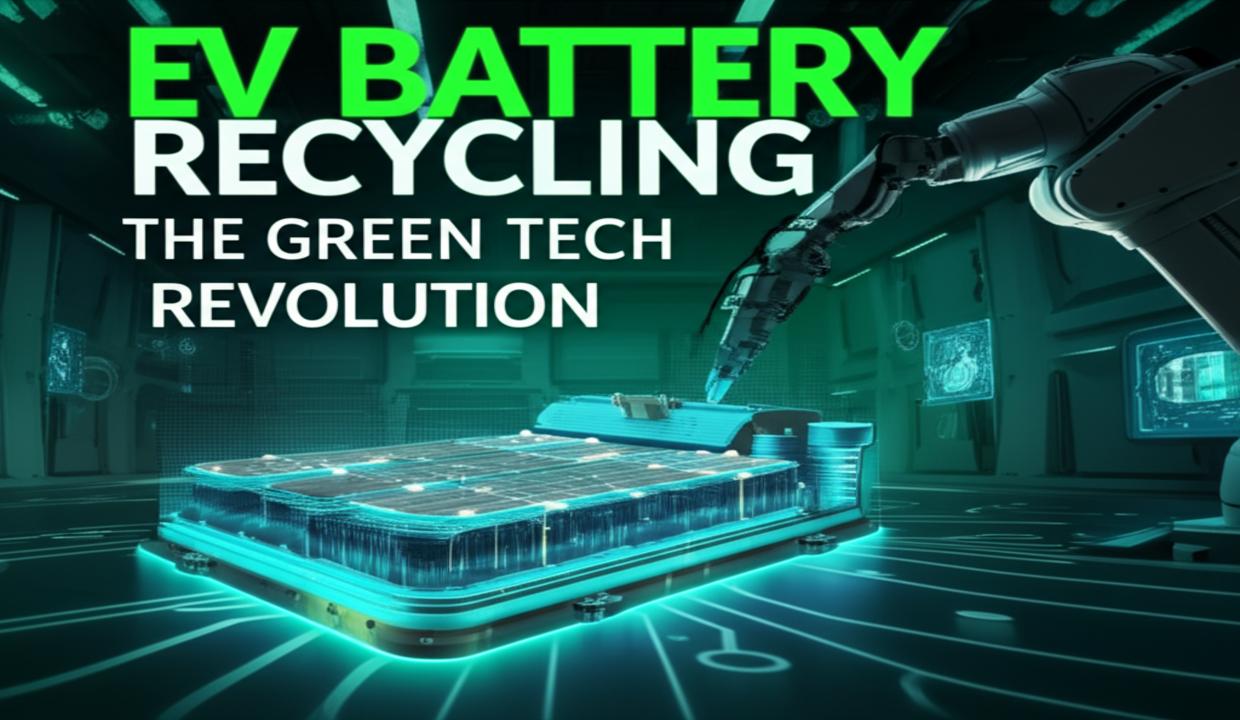
The electric vehicle (EV) revolution is accelerating at an unprecedented pace, promising a cleaner, greener future for transportation. Yet, beneath the shiny veneer of innovation lies a growing challenge: what happens to EV batteries when they reach the end of their life? This isn’t just about disposal; it’s about responsible, sustainable management. Thankfully, a wave of pioneering battery recycling startups is emerging, transforming potential environmental liabilities into valuable resources.
These forward-thinking companies are not just managing waste; they are innovating with advanced technologies like AI and sophisticated chemistry to redefine EV battery recycling. Their goal is to create a truly circular economy, ensuring that the materials powering our electric future are recovered, repurposed, and reused, minimizing environmental impact and securing critical supply chains. Get ready to explore the exciting world of safe EV battery disposal and the startups making it possible.
Main Highlights: EV Battery Disposal: Safe Recycling Startups on the Rise
The landscape of EV battery recycling is experiencing a significant shift, driven by a global commitment to sustainability and the rapid expansion of the EV market. A new generation of startups is leading this charge, bringing fresh perspectives and groundbreaking technologies to a once-nascent industry. They are focusing on methods that are not only efficient but also environmentally benign, marking a crucial step towards comprehensive sustainable EV solutions.
The market for EV battery recycling is poised for explosive growth, with projections indicating it could reach a staggering USD 23.2 billion by 2025. This forecast highlights the immense potential and urgent need for scalable, safe recycling processes. These innovative ventures are leveraging cutting-edge techniques, ensuring that valuable materials from lithium-ion battery recycling are recovered with minimal environmental footprint, moving us closer to a truly circular economy for electric vehicles.
Navigating the End of an Era: The Challenge of EV Battery Disposal
As electric vehicles become mainstream, the question of what to do with their large, complex batteries at the end of their operational life looms large. Traditional disposal methods, like landfilling, pose significant environmental risks due to the hazardous materials contained within these power packs. Furthermore, they represent a missed opportunity to reclaim valuable resources.
The complexity of EV batteries, with their intricate designs and diverse chemistries, makes their “electric vehicle battery disposal” a formidable challenge. Disassembly can be dangerous and inefficient if not handled correctly. Moreover, the energy-intensive and often polluting nature of older recycling methods underscores the critical need for cleaner, more effective solutions to protect our planet.
Pioneering Technologies: How Startups Revolutionize EV Battery Recycling
The new wave of battery recycling startups is redefining what’s possible in the realm of EV battery recycling. They are moving away from traditional, energy-intensive methods towards innovative processes that prioritize efficiency, safety, and environmental protection. These companies are transforming the challenge of battery disposal into an opportunity for resource recovery and sustainability.
A common thread among these innovators is the strategic application of advanced technologies. Artificial Intelligence (AI), for instance, is revolutionizing battery sorting and diagnostics, enhancing efficiency and safety. This allows for precise identification of battery types and conditions, optimizing the subsequent recycling steps and ensuring higher material recovery rates. It’s a game-changer for the entire industry.
One of the most promising advancements is hydrometallurgy. This chemical process uses aqueous solutions to extract valuable metals like lithium, cobalt, and nickel from spent batteries. Unlike pyrometallurgy (which involves high-temperature smelting), hydrometallurgy offers a cleaner, more energy-efficient alternative with significantly lower emissions. Many leading startups are embracing this eco-friendly approach.
ReCell (India) stands out with its commitment to sustainability, utilizing AI and hydrometallurgy to achieve zero emissions in their recycling process. This ensures maximum recovery of materials from lithium-ion battery recycling without harming the environment. Their innovative approach sets a new benchmark for clean technology in the industry.
Another compelling method is reverse manufacturing, championed by companies like Li-Cycle (Canada) and ABTC (American Battery Technology Company). This approach meticulously disassembles batteries, mirroring the original manufacturing steps, to reclaim components without the need for shredding or burning. It’s a remarkably clean process, making EV battery recycling not just sustainable but also economically viable.
Redwood Materials (USA) has made significant strides in material recovery, boasting the ability to recover up to 95% of valuable metals from end-of-life batteries. They then convert these reclaimed materials into new battery components, closing the loop on the manufacturing cycle. Their collaborations with major automotive giants are crucial for scaling up collection efforts and ensuring a steady supply of used batteries.
Further pushing the boundaries are firms like Bridge Green Upcycle (USA), which uses AI diagnostics and low-waste extraction for battery upcycling. Meanwhile, REELEMENTS (Germany) employs unique shock wave technology in liquid media for clean material separation. And in Singapore, GCL Recycle combines AI and hydrometallurgy to produce battery-grade outputs with no wastewater discharge, demonstrating a truly closed-loop system.
The Rise of Sustainable EV Solutions: Beyond Recycling
The vision for sustainable mobility extends beyond merely recycling; it encompasses the entire lifecycle of an EV battery. Innovative startups are not only focusing on reclaiming materials but also on extending the life of batteries through “second-life” applications, embodying the essence of sustainable EV solutions. This holistic approach maximizes resource utilization before the recycling process even begins.
A prime example is Betteries (Germany), which specializes in repurposing used EV batteries for smaller, less demanding applications. Imagine an old car battery finding new life powering a home energy storage system or an off-grid solar setup. This ingenuity significantly extends a battery’s useful lifespan, delaying the need for recycling and further reducing environmental impact. It’s a smart way to get more mileage out of every battery cell.
These startups also recognize that scaling their operations requires broad collaboration. They are actively partnering with auto manufacturers to establish efficient battery collection networks, ensuring that end-of-life batteries don’t end up in landfills but rather flow into recycling streams. Moreover, engagement with governments is crucial for developing supportive policies and infrastructure that facilitate widespread EV battery recycling.
The emphasis on zero emissions and high recovery rates underscores a profound shift in industrial philosophy. It’s about designing processes that are inherently clean and resource-efficient. This commitment not only minimizes environmental damage but also creates a secure, domestic supply of critical materials for future battery production, reducing reliance on volatile international markets.
This approach is crucial for a truly circular economy, where every component is valued and reintegrated.
Driving Economic Feasibility: Making EV Battery Recycling Profitable
Historically, one of the biggest hurdles for comprehensive EV battery recycling has been its costliness. Disassembling complex battery packs and extracting valuable materials has often been more expensive than mining new raw materials. However, emerging battery recycling startups are changing this narrative, proving that sustainability can also be profitable. They are turning waste into a valuable commodity.
Through technological advancements like AI-driven sorting and efficient hydrometallurgy, these companies are significantly reducing operational costs. By achieving high recovery rates of valuable metals such as lithium, cobalt, and nickel, they are creating a strong economic incentive for recycling. The increasing demand for these materials in new battery production further boosts their market value, making the entire process financially attractive.
The projected growth of the EV battery recycling market to USD 23.2 billion by 2025 is a clear indicator of this burgeoning economic viability. As more electric vehicles hit the road, the supply of end-of-life batteries will grow exponentially, creating a robust feedstock for recycling operations. This scalable model is essential for global adoption of sustainable practices, transforming perceived waste into economic opportunity.
These five startups could change that by making recycling clean and profitable for everyone involved.
The Pros and Cons of Emerging Battery Recycling Methods
| Pros | Cons |
|---|---|
| High material recovery, often exceeding 95% for valuable metals. | High initial setup costs for advanced, high-tech recycling facilities. |
| Significantly reduced environmental impact, including zero emissions and no wastewater discharge. | Complexity of battery disassembly varies greatly by manufacturer and design. |
| Creation of a robust circular economy for critical battery materials. | Scaling collection infrastructure globally to meet demand is a substantial challenge. |
| Economic benefits derived from the reclamation and sale of valuable metals. | Continuous research and development are needed for new battery chemistries. |
| Extended battery lifespan through successful “second-life” applications. | Regulatory frameworks are still evolving and vary widely across different regions. |
| Reduced reliance on mining new raw materials, enhancing supply chain security. | Logistical complexities in transporting large, heavy, and sometimes hazardous batteries. |
Key Players and Their Innovative Approaches
The global race towards sustainable lithium-ion battery recycling is being led by a dynamic group of startups, each bringing unique strengths and technologies to the forefront. These innovators are not just solving a problem; they are building an entirely new industry that will be crucial for the future of electric mobility. Their diverse approaches highlight the complexity and potential of this field.
Li-Cycle (Canada) is recognized globally for its ‘Spoke & Hub’ model, which processes batteries through shredding at regional ‘Spokes’ and then refines the resulting ‘black mass’ at central ‘Hubs’ using hydrometallurgy. Their focus on environmental benefits and profitability makes them a leader in the space. They are truly making EV battery recycling a viable industry.
Redwood Materials (USA), founded by former Tesla CTO JB Straubel, is another powerhouse. Their integrated approach recovers critical materials and then manufactures new battery components directly from these recycled resources. Their partnerships with automakers like Ford and Volvo are instrumental in creating a closed-loop supply chain, demonstrating a significant commitment to sustainable EV solutions. You can find more about top battery recycling startups like Redwood.
Meanwhile, ReCell (India) is making waves with its AI-powered hydrometallurgy, delivering zero emissions recycling. This Indian startup exemplifies how technology, combined with a strong environmental ethos, can create highly efficient and clean processes, revolutionizing the way batteries are handled globally. These innovative battery recycling companies are truly transforming the landscape.
These companies, along with others like ABTC, Bridge Green Upcycle, and REELEMENTS, represent the vanguard of battery recycling. Their collective efforts, spanning various continents, are showing how AI and green chemistry are rapidly revolutionizing electric vehicle battery disposal. The rapid growth of energetic battery startups signals a bright future for sustainability. #EVRecycling
FAQ
- What are the main methods for EV battery recycling?
The primary methods for EV battery recycling include pyrometallurgy (high-temperature smelting) and hydrometallurgy (chemical leaching). Newer, more sustainable approaches also involve direct recycling, which aims to preserve the battery’s structure, and reverse manufacturing. Many startups are combining these with AI for enhanced efficiency and lower environmental impact.
- Why is EV battery recycling important?
EV battery recycling is crucial for several reasons: it recovers valuable critical metals (like lithium, cobalt, nickel), reduces reliance on mining, mitigates environmental pollution from improper disposal, and supports a circular economy. It’s essential for the long-term sustainability of the EV industry and securing material supply for future batteries.
- Which companies are leading battery recycling startups?
Several companies are at the forefront of the battery recycling startups movement. Key players include Li-Cycle (Canada), Redwood Materials (USA), ReCell (India), ABTC (American Battery Technology Company), and Betteries (Germany). These companies employ diverse, innovative technologies to make recycling more efficient and environmentally friendly, often aiming for zero emissions.
- How can individuals contribute to sustainable EV solutions?
Individuals can contribute by choosing electric vehicles, researching manufacturers with strong recycling partnerships, and advocating for policies that support battery collection and recycling infrastructure. Supporting companies that offer “second-life” applications for batteries also plays a significant role in promoting sustainable EV solutions and extending battery lifecycles before recycling.
- What are the future prospects for EV battery recycling?
The future of EV battery recycling looks incredibly promising, with the market projected to reach USD 23.2 billion by 2025. Ongoing innovation in areas like AI, advanced hydrometallurgy, and closed-loop systems will make processes even more efficient and sustainable. Collaboration between automakers, governments, and recycling startups will be key to scaling operations and creating a truly circular economy for EV batteries.
Conclusion
The rise of innovative battery recycling startups marks a pivotal moment in the electric vehicle revolution. Far from being a mere afterthought, safe and efficient EV battery disposal is becoming a cornerstone of true sustainability. These pioneering companies are demonstrating that advanced technology, economic viability, and environmental responsibility can go hand in hand.
By leveraging cutting-edge solutions like AI, hydrometallurgy, and reverse manufacturing, they are not only recovering valuable materials but also minimizing emissions and creating a secure supply chain for the future. The growth of this sector, projected to reach billions, underscores its critical importance to the global shift towards electric mobility. The future of sustainable EV solutions is brighter thanks to their relentless innovation.
We hope this deep dive into the world of lithium-ion battery recycling has shed light on the incredible progress being made. For more insights into the latest tech trends and sustainable practices, feel free to read other articles on our site. Share your thoughts and questions in the comments below – we’d love to hear from you!
Watch More in This Video
Disclaimer: All images and videos are sourced from public platforms like Google and YouTube. If any content belongs to you and you want credit or removal, please inform us via our contact page. Learn more About Us and our commitment to providing helpful content.