
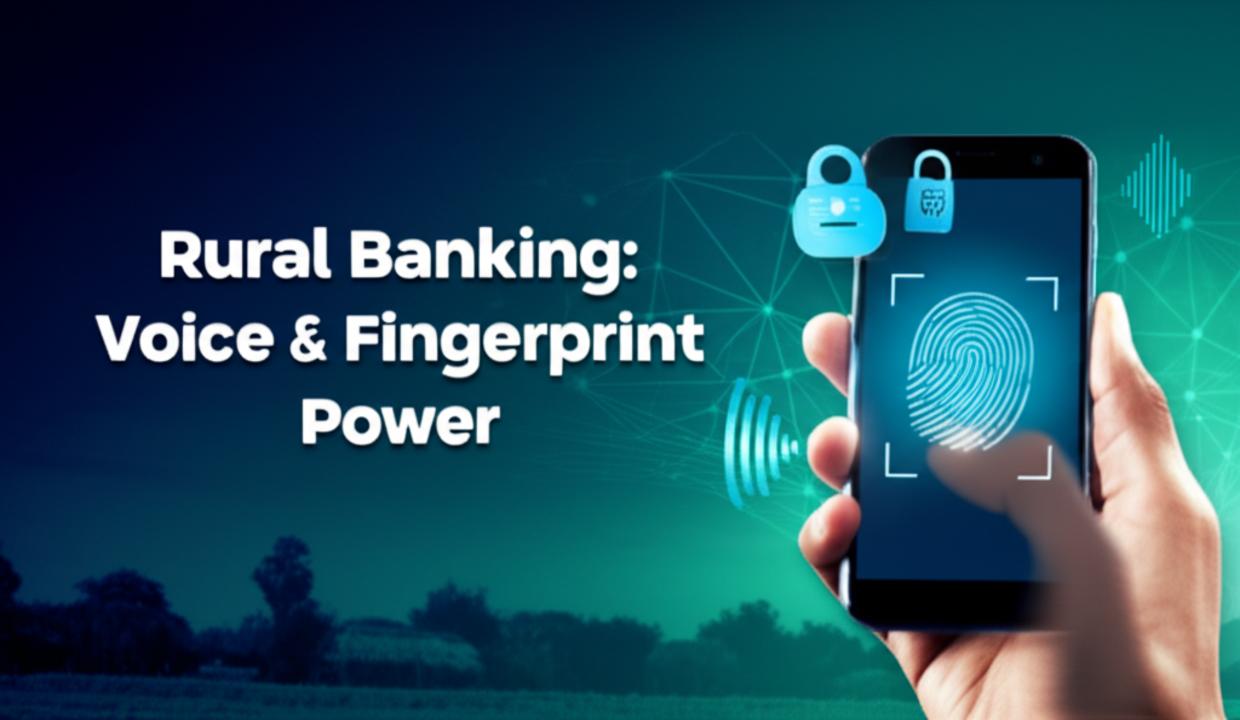
In a world increasingly driven by digital convenience, traditional banking often leaves vast segments of the population behind, especially those in remote or rural areas. However, a revolutionary shift is underway with the advent of FinTech voice banking, a powerful solution that combines the unparalleled security of fingerprint identification with the natural ease of voice recognition. This innovative approach is specifically tailored to empower rural banking, making financial services accessible, secure, and user-friendly for everyone, regardless of literacy levels or geographical constraints.
Imagine managing your finances by simply speaking, with your identity confirmed by your unique voice and fingerprint. This isn’t a futuristic dream; it’s the reality brought by advanced fingerprint voice banking. It’s a game-changer for digital rural finance, ensuring financial inclusion for communities that have historically been underserved, bridging the gap between traditional banking and modern technological convenience.
Main Highlights: FinTech Voice Banking: Fingerprint + Voice for Rural Users
The core of this groundbreaking technology lies in its ability to provide a secure and intuitive banking experience. By merging two distinct biometric identifiers, it creates an impenetrable shield against fraud while simplifying interactions. This is particularly vital for expanding accessible banking to regions where physical bank branches are scarce and internet connectivity might be limited.
- Multimodal Security: Combines unique fingerprint data with distinctive voice patterns for robust authentication.
- Beyond Passwords: Eliminates the need for complex passwords, enhancing user experience and security.
- Literacy Independent: Voice interaction removes barriers for users who cannot read or write, fostering true financial inclusion.
- Remote Accessibility: Enables banking services from anywhere using a mobile phone, reducing travel burdens for rural users.
- Privacy Focused: Allows sensitive transactions to be conducted privately, without relying on intermediaries.
How FinTech Voice Banking Works: A Blend of Biometric Security
At its heart, FinTech voice banking utilizes multimodal biometric authentication. This sophisticated system combines two distinct methods to verify a user’s identity, making it exceptionally secure. The first component is fingerprint recognition, which captures and analyzes the unique ridge patterns on a user’s finger. Each fingerprint is unique, providing a highly reliable physical identifier.
The second, equally crucial component, is voice biometrics. This technology doesn’t just recognize what you say; it identifies who is speaking by analyzing various vocal traits. These include pitch, tone, cadence, speech rhythm, and even subtle nuances in pronunciation. Voice biometrics can work passively, verifying identity as you speak naturally, or actively, requiring you to recite a specific passphrase.
This dual-factor approach creates a powerful defense against unauthorized access. If one biometric measure is compromised (which is highly unlikely), the other acts as a backup, ensuring that only the legitimate user can access their accounts. This layered security avoids the pitfalls of traditional passwords, which are often forgotten, stolen, or weak, offering a seamless yet foolproof authentication process.
Unlocking Rural Potential: Benefits for Underserved Communities
For rural populations, the impact of fingerprint voice banking is transformative, addressing long-standing barriers to financial services.
- Increased Accessibility: Voice technology transcends literacy barriers. Users can simply speak their native language to conduct transactions, eliminating the need to read or write complex banking forms or instructions. This opens up banking to a previously excluded demographic.
- Enhanced Convenience: Imagine managing your money from your farm or village, without needing to travel long distances. Remote access to banking services via mobile phones significantly reduces costly and time-consuming journeys to distant branches, a major advantage for rural areas often characterized by poor infrastructure.
- Privacy and Dignity: In close-knit rural communities, privacy can be a concern. Voice interaction allows sensitive financial transactions to be conducted personally and directly, without requiring intermediaries or discussions in public, thereby preserving individual privacy and dignity.
- 24/7 Availability: AI-powered voice bots provide round-the-clock service. This continuous availability is perfectly aligned with the often unpredictable and demanding work schedules of rural communities, such as farming, ensuring assistance is always at hand.
- Simplified Onboarding: For many in rural areas, formal identification documents can be scarce. Using fingerprints and voice biometrics for verification eliminates the traditional reliance on extensive paper documentation, significantly simplifying the process of opening bank accounts and accessing services. This is a crucial step for boosting digital rural finance.
Fortifying Security: Why This Duo is Unbeatable
The combination of fingerprint and voice biometrics offers unparalleled security advantages, making fraud significantly harder to commit.
Voice biometrics, with its multi-dimensional analysis, makes spoofing attempts exceedingly difficult. Advanced systems can detect subtle differences between a live voice and a recording, or even identify synthetically generated or altered voices. This means a fraudster cannot simply play a recording of your voice to gain access.
Real-time voice authentication further enhances security by helping to prevent fraud dynamically. These systems can identify known fraudulent voice patterns, flag suspicious requests, and even analyze caller stress or coercion indicators during an ongoing conversation. This proactive monitoring adds a critical layer of defense.
When combined with the unique data provided by fingerprint recognition, the system forms a robust, layered defense against unauthorized access. This dual verification process ensures that even if one biometric measure is somehow compromised, the other acts as an unyielding barrier, protecting user funds and sensitive information from potential breaches. This makes FinTech voice banking a fortress for your finances.
Real-World Impact: Applications and Use Cases
The practical applications of fingerprint voice banking are already making a tangible difference, especially in empowering rural banking.
- Mobile Banking Apps: Leading FinTech companies are embedding voice and fingerprint authentication directly into their mobile banking applications. This enables users to perform secure P2P payments, access account balances, manage loans, and more, even in rural areas where internet connectivity might be limited but mobile phone penetration is high. This brings banking to the palm of their hand, securely.
- Voice Bots for Lending: AI-driven, multilingual voice bots are proving invaluable for rural borrowers. They can guide users through loan applications, provide financial information, and answer queries in their native language. This significantly expands access to credit for underserved populations and can even help reduce default rates by offering clear, immediate assistance. For more on this, you can explore how voice bots are revolutionizing rural lending by breaking language barriers.
- Customer Support: Voice authentication simplifies and secures customer service interactions. When a user calls for support, their voice is instantly verified, eliminating the need for tedious security questions. This not only enhances customer satisfaction through faster service but also minimizes fraud risks during support calls. Learn more about securing customer interactions with voice biometrics.
Latest Innovations and Industry Trends for 2025
The financial industry is rapidly embracing biometric authentication, with FinTech voice banking at the forefront. Large financial institutions like Wells Fargo have already introduced voice biometric security in their mobile banking platforms, showcasing a clear shift towards more intuitive and secure authentication methods.
Recent advancements in voice biometrics are particularly exciting. Passive authentication is becoming more prevalent, allowing users to be verified simply by speaking naturally during a conversation, rather than having to recite specific passphrases. This seamless integration enhances user experience while maintaining robust security. This truly marks a significant step, paving the way for a future where we can say goodbye to passwords.
The synergy of voice and fingerprint technology is making a profound impact, especially in developing regions. Here, mobile phone penetration is high, but traditional identification documents and physical banking infrastructure are often lacking. This combination offers a practical and scalable solution for extending digital rural finance and financial inclusion to millions.
Overcoming Challenges and Future Outlook
While FinTech voice banking offers immense potential, challenges remain, particularly in rural environments. Poor network quality and significant background noise can sometimes impede the accuracy of voice biometrics. However, continuous improvements in AI algorithms and signal processing technologies are specifically designed to overcome these issues, making the systems more resilient in varied conditions.
The future of accessible banking looks even more promising. Future systems are likely to integrate behavioral analytics, which studies unique user behaviors like typing patterns or navigation habits, alongside existing multimodal biometrics. This holistic approach will create an even more seamless yet foolproof security system, ensuring comprehensive financial inclusion for underserved rural populations worldwide. This technology is a critical tool for bridging the gap for the unbanked.
Pros and Cons
| Pros | Cons |
|---|---|
| Enhanced security with dual biometrics. | Potential issues with poor network quality. |
| Removes literacy barriers for users. | Background noise can sometimes affect voice recognition. |
| Increases convenience and 24/7 access. | Requires a smartphone or device with biometric capabilities. |
| Simplifies onboarding for unbanked populations. | Adoption rates may vary due to technological literacy gaps. |
| Reduces travel to distant bank branches. | Initial setup might require some guidance for novice users. |
| Preserves user privacy in transactions. | Ongoing AI improvements are needed for extreme conditions. |
FAQ
-
What is FinTech voice banking with fingerprint?
It’s an advanced banking system that verifies a user’s identity by simultaneously analyzing their unique voice patterns and fingerprint. This dual-biometric approach significantly enhances security and convenience, replacing traditional passwords and PINs for accessing financial services.
-
How does it benefit rural users specifically?
This technology removes barriers like literacy, allowing users to conduct transactions by speaking in their native language. It offers 24/7 remote access via mobile phones, reducing the need for costly travel to physical branches, and simplifies the account opening process by minimizing paper documentation.
-
Is voice biometrics truly secure against spoofing?
Yes, modern voice biometric systems are highly secure. They analyze multiple vocal dimensions and can detect synthetic voices, recordings, or attempts at impersonation. When combined with fingerprint authentication, the security becomes exceptionally robust, creating a multi-layered defense against fraud. You can read more about voice biometrics in banking.
-
What challenges does this technology face in rural settings?
Main challenges include managing inconsistent internet connectivity and high background noise, which can affect voice recognition accuracy. However, ongoing advancements in AI and signal processing are continuously improving the system’s resilience and adaptability to these conditions.
-
Can FinTech voice banking replace physical bank branches?
While it significantly reduces the reliance on physical branches by offering remote access, it’s more likely to complement them, especially in rural areas. It expands access for those who previously had none, reducing the need for frequent branch visits for routine transactions, but branches may still serve for complex needs or cash services. #DigitalTransformation
Conclusion
FinTech voice banking, empowered by the synergy of fingerprint and voice authentication, stands as a beacon of progress in the journey towards universal financial inclusion. This innovative approach is not just a technological marvel; it’s a social equalizer, bringing secure, convenient, and dignified banking services to the doorsteps of previously underserved rural populations worldwide. By overcoming traditional barriers like literacy and geographical distance, it paves the way for a more equitable and financially empowered future for all. As technology continues to evolve, we can anticipate even more seamless and robust solutions, further solidifying the role of digital rural finance as a cornerstone of modern development.
We hope this article has shed light on the incredible potential of this technology. Feel free to share your thoughts in the comments below, or learn more about us and explore other insightful articles on our platform. For more information, you can always reach out to us.
Watch More in This Video
Disclaimer: All images and videos are sourced from public platforms like Google and YouTube. If any content belongs to you and you want credit or removal, please inform us via our contact page.