
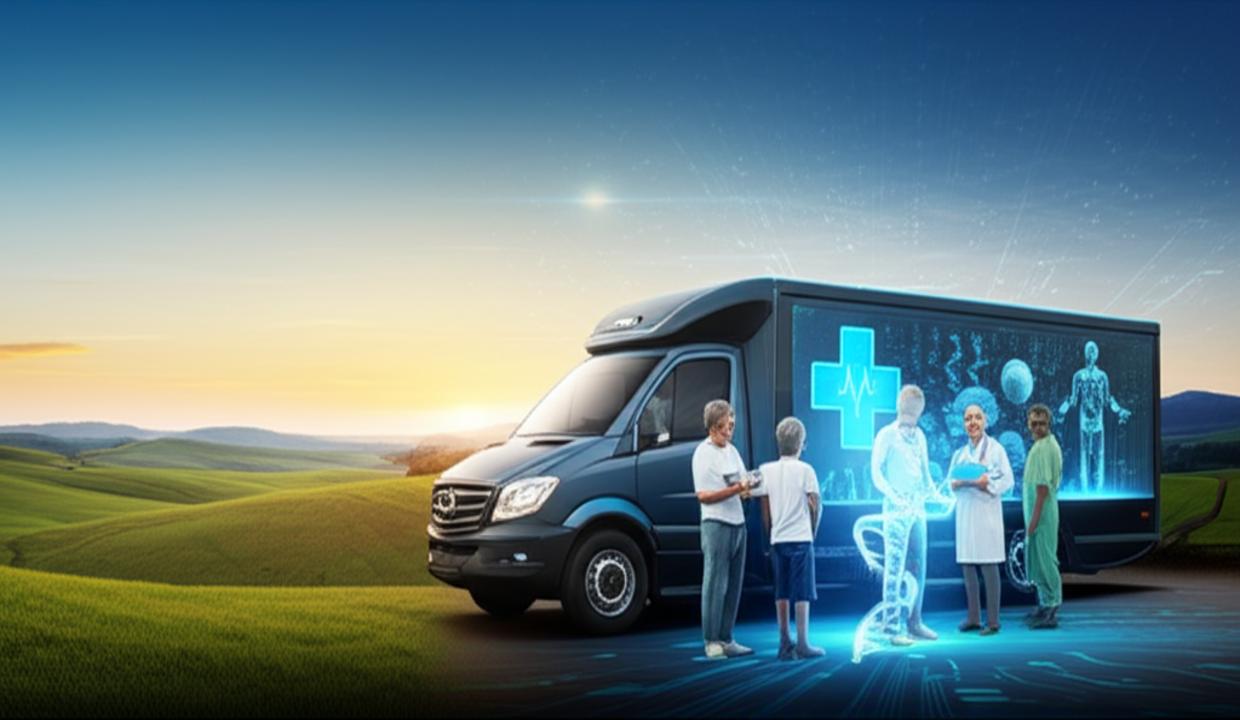
Imagine a world where top-tier medical diagnostics are not confined to bustling city hospitals but are readily available in the most remote corners of our planet. This isn’t a futuristic fantasy anymore; it’s rapidly becoming a reality thanks to groundbreaking HealthTech solutions. We’re talking about AI-based mobile diagnostic labs, portable clinics that are set to revolutionize healthcare access for millions living in underserved rural villages.
These innovative units are more than just vans with medical equipment. They are intelligent, AI-powered systems designed to bring sophisticated village diagnostic services directly to communities that historically lack access to specialized care. From automated blood tests to AI-assisted ultrasounds, these mobile labs are bridging geographical divides and transforming what’s possible in rural medicine. Let’s delve into how this incredible fusion of artificial intelligence and mobility is creating a new era of equitable healthcare.
Main Highlights: HealthTech: AI-Based Mobile Diagnostic Labs for Villages
- AI mobile labs are portable clinics integrating advanced medical AI for diagnostics and clinical support.
- They overcome geographical barriers, bringing essential care to remote villages.
- Recent breakthroughs include lightweight, all-in-one stations and advanced AI systems like Multi-Tags.
- Real-world applications are emerging in China and the US, showcasing improved access and accuracy.
- Benefits include enhanced diagnostic precision, cost-effectiveness, and better data integration for public health.
- Future potential is immense, though challenges like data privacy and infrastructure need addressing.
The Vision: What Are AI-Based Mobile Diagnostic Labs?
At their core, AI-based mobile diagnostic labs are highly specialized vehicles or portable units equipped with a suite of medical tools and, crucially, artificial intelligence systems. Think of them as miniature, smart hospitals on wheels, designed specifically for the unique challenges of rural environments. Their primary goal is to empower local healthcare providers, often general practitioners or community health workers, with diagnostic capabilities that would otherwise require travel to distant urban centers.
The working principle is fascinating. These labs integrate various diagnostic instruments, such as devices for checking blood pressure, performing ECGs, or conducting urine and blood tests. What makes them revolutionary is the embedded AI. This artificial intelligence analyzes the data collected from these tests in real-time. It can then assist in generating diagnoses, providing clinical decision support, and even guiding medical staff through complex procedures. Whether on-site or connected remotely via cloud platforms, the AI acts as an invaluable assistant, enhancing the capabilities of the medical personnel on board.
These systems are pivotal in areas where specialist doctors are scarce. They aim to democratize access to timely and accurate diagnostics, a cornerstone of effective healthcare. The promise of AI mobile labs lies in their ability to deliver advanced medical technology right to the patient’s doorstep, fostering a proactive approach to health rather than a reactive one.
Breaking Barriers: Recent Breakthroughs in HealthTech
The concept of mobile clinics isn’t new, but the integration of cutting-edge AI has truly transformed their potential. Recent years have seen remarkable progress in making these HealthTech solutions not just feasible, but highly effective. These breakthroughs are paving the way for a new era of rural health technology.
One significant advancement comes from China, where developers have created portable, all-in-one diagnostic stations. These compact units weigh only around 11 pounds, making them incredibly easy to transport to even the most isolated villages. They are capable of running multiple tests, from basic vitals to more complex analyses. Crucially, they upload results to secure cloud-based AI systems for immediate diagnosis and record management. This streamlined process has been instrumental in improving primary healthcare in China’s vast rural areas.
Across the globe, in the United States, a multi-institutional project is pushing the boundaries even further. Funded by ARPA-H, an advanced research agency focused on health, this initiative is led by experts from Colorado State University and the University of Michigan. Their focus is on innovating AI systems that can support general practitioners in mobile clinics, essentially bringing hospital-level diagnostics and procedures to remote communities. This project signifies a major step towards making advanced care universally accessible. You can learn more about this exciting initiative that aims to bring sophisticated diagnostic capabilities to remote areas by visiting this article: CSU Leads AI Development for Use in Mobile Rural Health Clinic.
Adding to these innovations, researchers at the University of Florida have developed an impressive AI system named Multi-Tags. This system, designed for mobile labs, leverages the power of large language models (LLMs) and multimodal models. It’s built to guide basic lab procedures and interpret complex medical inputs, with the ambitious goal of delivering hospital-grade care through electric mobile units under the banner of the PARADIGM initiative. This project truly embodies the future of village diagnostic services. Further details on this initiative can be found here: UF Researchers Awarded Funding to Enhance Rural Healthcare Using Mobile AI.
These breakthroughs highlight a concerted global effort to harness AI’s potential for equitable healthcare. The miniaturization of equipment, combined with sophisticated AI algorithms, is making these powerful diagnostic tools more portable and user-friendly than ever before.
AI in Action: Real-World Use Cases and Impact
The theoretical promise of AI-based mobile diagnostic labs is already translating into tangible benefits in various parts of the world. These real-world applications demonstrate how AI mobile labs are transforming lives and healthcare systems in rural villages.
In China, AI-powered diagnostic stations are actively deployed in rural communities. These stations provide vital primary healthcare services, significantly improving the timeliness of diagnoses and ongoing patient monitoring. The beauty of this system is that it reduces the reliance on specialist presence, a common bottleneck in remote areas. Patients can receive quicker insights into their health, leading to earlier intervention and better outcomes.
In the United States, while still largely in the pilot and development phases, the vision for mobile clinics operating in underserved rural areas is clear. They are designed to use AI to assist generalist medical practitioners with tests and procedures they might be unfamiliar with, such as ultrasounds. This direct access to advanced diagnostic support right in their community reduces the immense burden on patients who would otherwise have to travel long distances to urban medical centers. This not only saves time and money but also mitigates health risks associated with delayed care. You can read more about how mobile clinics with AI could improve rural healthcare access by clicking this link: Mobile Clinics with AI Could Improve Rural Healthcare Access.
Beyond immediate diagnostics, these AI-guided mobile labs also serve a crucial educational purpose. They can train rural healthcare workers through interactive interfaces and chatbots. This on-the-job training enhances local capacity, ensuring that communities can sustain and improve their healthcare services long-term. This capability is a game-changer for building robust and resilient healthcare infrastructures in remote regions. The impact extends beyond just immediate treatment, fostering a more knowledgeable and capable local workforce, which is a cornerstone of sustainable rural health technology.
Unlocking Potential: Key Benefits and Applications for Rural Health
The advantages of deploying AI-based mobile diagnostic labs are multifaceted, addressing some of the most persistent challenges in global healthcare. These benefits underscore why these HealthTech solutions are not just an improvement but a revolution for rural health technology.
- Improved Healthcare Access: This is perhaps the most immediate and profound benefit. AI mobile labs overcome significant geographical barriers and staff shortages by bringing diagnostic capabilities directly to isolated villages. For many, this means access to medical attention they previously could only dream of, avoiding arduous and costly journeys to distant hospitals.
- Enhanced Diagnostic Accuracy: AI acts as an intelligent co-pilot for healthcare providers. It supports less experienced practitioners by providing real-time guidance during tests and analyses. This reduces the likelihood of human error in both testing procedures and diagnostic interpretation, leading to more accurate and reliable health assessments. For instance, an AI system can cross-reference symptoms and test results against vast medical databases to suggest potential diagnoses, similar to what a specialist might do.
- Cost-Effectiveness: By enabling early diagnostics and onsite treatment, mobile AI clinics significantly reduce the need for expensive patient transport and lengthy hospital stays. Catching diseases early and managing them within the community drastically cuts down healthcare expenditures for both patients and the healthcare system. This makes high-quality village diagnostic services much more sustainable in the long run.
- Scalability and Data Integration: The AI systems in these labs typically connect via secure cloud platforms. This connectivity builds a vast network of health data, which is invaluable for epidemiological monitoring, tracking disease outbreaks, and developing more personalized care plans. This aggregated data can also inform public health policies, allowing for more targeted interventions and resource allocation, making it a cornerstone of advanced rural health technology. Furthermore, the modular nature of these labs means they can be scaled up or down depending on the population’s needs, offering flexibility in deployment.
These benefits collectively paint a picture of a more accessible, accurate, and efficient healthcare landscape for rural populations, fundamentally reshaping how healthcare is delivered and experienced.
Looking Ahead: Future Potential and Current Limitations
The journey of AI-based mobile diagnostic labs is still unfolding, promising even more transformative capabilities in the near future while also presenting crucial challenges that need to be addressed. The potential for these HealthTech solutions to revolutionize rural health technology is immense.
In terms of future potential, ongoing projects aim to refine AI teaming systems. These advanced AI assistants are designed to actively assist providers not just in diagnosis but also during complex medical procedures. Imagine an AI guiding a general practitioner through an intricate ultrasound or a minor surgical procedure with real-time feedback and visual cues. This could significantly expand the scope of what village diagnostic services can offer, bringing hospital-level procedural capabilities directly to patients in their communities over the next 5 years. The PARADIGM initiative, for example, is specifically focused on developing these capabilities further.
However, the path forward is not without its hurdles. One significant challenge lies in designing AI systems that are truly tailored to rural infrastructural limitations. This includes ensuring they can function effectively with limited internet connectivity, unreliable power sources, and in diverse environmental conditions. Data privacy is another paramount concern; handling sensitive patient information in mobile, cloud-connected systems requires robust security protocols to prevent breaches and ensure patient trust. Finally, validating AI recommendations across diverse populations and demographics is crucial. AI models must be trained on a broad range of data to avoid biases and ensure their accuracy and applicability for everyone, regardless of their background or location. Ensuring these systems are truly helpful and not just technologically advanced is key to their long-term success. A study on artificial intelligence in healthcare highlights some of these considerations: Artificial Intelligence in Healthcare: Past, Present and Future.
Despite these challenges, the trajectory for AI mobile labs is overwhelmingly positive. Continued research and development, combined with thoughtful policy-making, will undoubtedly refine these technologies, making high-quality healthcare a universal right rather than a privilege tied to geography. The commitment to innovation in this field is strong, promising a future where #HealthEquity is not just a dream but a reality for all.
FAQ
-
What are AI-based mobile diagnostic labs?
They are portable clinics equipped with medical AI technologies. These labs assist healthcare providers in rural villages by automating and enhancing diagnostic tests like blood pressure, ECGs, and various blood and urine analyses. The AI analyzes data, suggests diagnoses, and guides medical staff, bringing advanced care directly to remote populations.
-
How do AI mobile labs improve rural health technology?
They revolutionize rural healthcare by overcoming geographical barriers and staff shortages. By bringing hospital-level diagnostics to villages, they reduce patient travel, enable earlier disease detection, and support less experienced local practitioners with real-time AI guidance, making healthcare more accessible and accurate.
-
Are these HealthTech solutions cost-effective for villages?
Yes, significantly. While initial setup involves investment, these mobile labs reduce long-term costs associated with patient transport to urban centers and hospital stays due to late diagnoses. Early detection and onsite treatment save money for both individuals and the broader healthcare system, making healthcare more sustainable.
-
What are the main challenges in implementing village diagnostic services with AI?
Key challenges include designing AI tailored to rural infrastructural limitations (e.g., internet connectivity, power), ensuring robust data privacy and security for sensitive patient information, and validating AI recommendations across diverse populations to prevent biases and ensure universal applicability.
-
How does AI assist healthcare workers in these labs?
The AI acts as an intelligent assistant, analyzing diagnostic data, providing clinical decision support, and offering real-time guidance during procedures. It can also serve as an interactive training tool, using chatbots and interfaces to enhance local healthcare workers’ skills and confidence in performing complex tasks.
Conclusion
The advent of AI-based mobile diagnostic labs is not merely an incremental improvement in healthcare; it represents a paradigm shift. By merging the agility of mobile clinics with the analytical power of artificial intelligence, we are witnessing the birth of truly equitable healthcare. These cutting-edge HealthTech solutions are dismantling barriers of distance and resource scarcity, bringing vital village diagnostic services directly to the doorsteps of those who need them most.
From improving diagnostic accuracy and enhancing cost-effectiveness to fostering local medical expertise, the benefits are profound and far-reaching. While challenges related to infrastructure and data security persist, ongoing research and global collaborative efforts are steadily overcoming these hurdles. The future of rural health technology, spearheaded by these incredible AI mobile labs, promises a healthier, more connected world for everyone. Join the conversation and share your thoughts on this exciting revolution, or read other articles to learn more about innovations shaping our future. You can also connect with us via our Contact page to learn more about our commitment to bringing you the latest in tech.
Watch More in This Video
Disclaimer: All images and videos are sourced from public platforms like Google and YouTube. If any content belongs to you and you want credit or removal, please inform us via our contact page.