
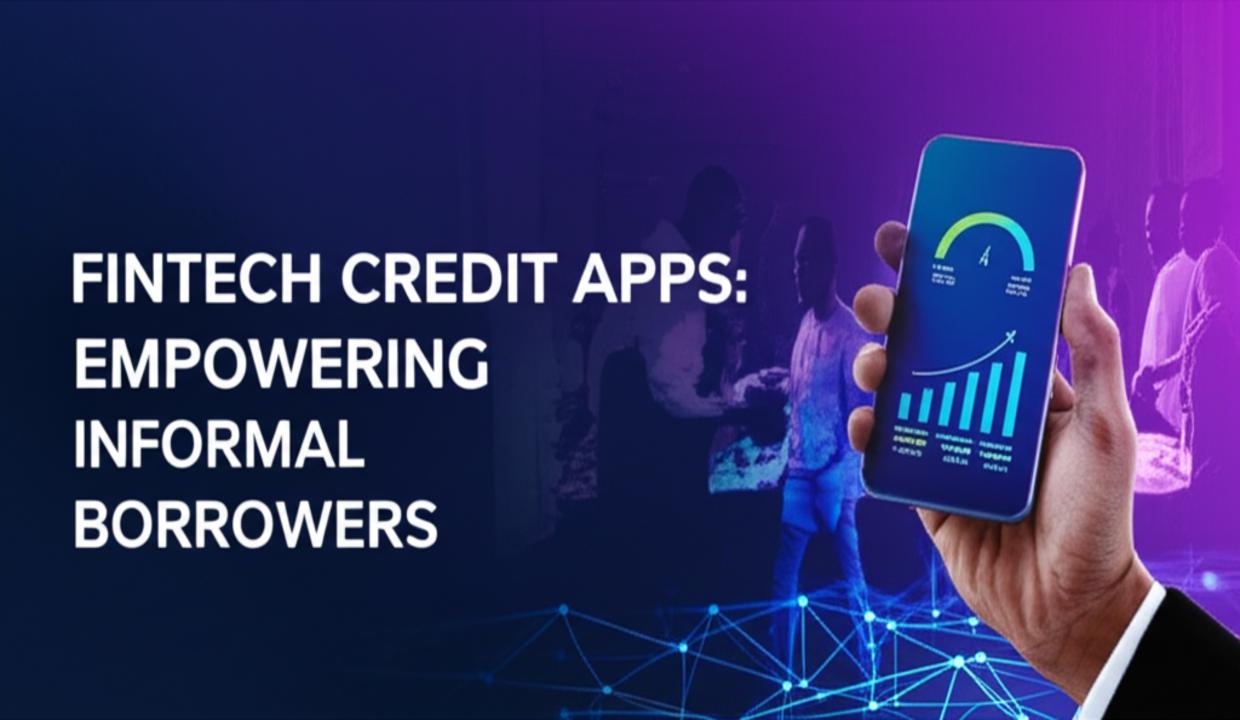
In a world increasingly driven by digital solutions, access to financial services remains a significant hurdle for billions. Especially in the informal sector, traditional banking systems often fail to serve individuals who lack formal employment, verifiable income, or a conventional credit history. This exclusion traps countless entrepreneurs, small business owners, and daily wage earners in a cycle of limited opportunities. Fortunately, a revolutionary wave of technology is changing this narrative. FinTech credit apps are emerging as powerful tools, democratizing financial access and empowering informal sector borrowers like never before.
These innovative platforms are not just about lending; they are about redefining creditworthiness. By leveraging alternative data and advanced algorithms, FinTech credit apps create inclusive, fair credit assessments for those previously deemed “unbankable.” This comprehensive guide will explore how these apps function, their profound impact on financial inclusion, the technologies that drive them, and what the future holds for this transformative space. Prepare to discover how technology is unlocking economic potential for millions.
The Unseen Economy: Why Informal Borrowers Struggle
The informal sector, often bustling with vibrant economic activity, forms the backbone of many developing economies. Think of street vendors, artisans, freelance workers, and small-scale farmers. Despite their significant contributions, these individuals frequently operate outside formal financial systems. They lack traditional pay stubs, registered addresses, or bank accounts that mainstream lenders typically require for credit assessment.
This lack of formal documentation leads to a stark reality: limited access to affordable credit. Without loans, these informal entrepreneurs struggle to invest in their businesses, manage emergencies, or pursue growth opportunities. They often resort to informal lenders who charge exorbitant interest rates, perpetuating a cycle of debt and limiting their potential for upward mobility. Bridging this gap is crucial for equitable economic development.
Traditional banks perceive these borrowers as high-risk due to a perceived lack of data. Their established risk assessment models simply aren’t designed to understand the financial nuances of the informal economy. This systemic oversight leaves a vast portion of the global population underserved, highlighting a critical need for new, adaptive solutions to provide informal sector credit. For more insights on this issue, explore discussions on unlocking financial access for the invisible economy via financial access for the invisible economy.
How FinTech Credit Apps Are Bridging the Gap
Enter FinTech credit apps – digital platforms designed to serve the very demographic traditional finance overlooks. These apps operate on a fundamental premise: everyone has a digital footprint, and this footprint can reveal creditworthiness, even without formal records. They leverage readily available data, such as mobile phone usage, payment history for utilities, and even social media activity, to build comprehensive financial profiles.
The genius lies in their ability to analyze this non-traditional data. Instead of relying solely on bank statements or credit bureau scores, these apps look at patterns of behavior that indicate reliability and repayment capacity. This innovative approach moves beyond outdated criteria, providing a more holistic and accurate picture of an individual’s financial habits. It’s a seismic shift from exclusion to empowerment.
By offering accessible and often instant credit, these apps enable informal sector borrowers to seize opportunities. They can purchase inventory, invest in equipment, or cover unexpected expenses without falling prey to predatory lending. This direct access to capital fuels entrepreneurship and strengthens local economies from the ground up, promoting genuine financial inclusion.
The Power of Alternative Data in Credit Scoring
The cornerstone of modern FinTech credit apps is their reliance on alternative data. Unlike the traditional data points like salary slips or formal credit history, alternative data incorporates a much broader spectrum of information. This includes digital transactions, mobile money transfers, behavioral patterns from app usage, utility bill payments, and even records from savings group behavior. This rich tapestry of data allows for a more comprehensive assessment.
For instance, an individual consistently paying their mobile phone bills on time demonstrates a reliable payment habit. Regular contributions to a community savings group indicate financial discipline and commitment. These are invaluable insights that traditional credit bureaus typically overlook. By incorporating such diverse data points, FinTech credit score apps paint a more accurate picture of an individual’s capacity and willingness to repay a loan.
This approach is particularly effective for unbanked and underbanked populations. It transforms previously invisible financial behaviors into quantifiable metrics, opening doors to credit that were once firmly shut. The shift to alternative data is fundamentally changing who can access credit and how creditworthiness is defined, making credit for informal borrowers a tangible reality.
AI and Machine Learning: Driving Fairer Decisions
Processing vast amounts of alternative data requires sophisticated tools. This is where machine learning algorithms and artificial intelligence (AI) come into play. These advanced models are designed to analyze complex datasets, identify patterns, and predict credit risk with remarkable accuracy and speed. They can objectively process information, significantly reducing human bias that might exist in traditional lending processes.
The algorithms learn and improve over time, becoming more adept at identifying reliable borrowers within the informal sector. This automation not only accelerates loan approvals but also makes the process more consistent and fair. Decisions are based on data-driven insights rather than subjective judgments or limited information. This technological backbone is critical for scaling operations and reaching millions of underserved individuals.
Furthermore, the evolution of these scoring models also factors in regulatory compliance, such as the EU’s CCD2 (Consumer Credit Directive 2) and AI Act, which enforce transparency and fairness in credit decisions. This ensures that while expanding access, these new methods also protect borrower rights. Insights into these advanced models can be found in research on alternative credit scoring for financial inclusion.
Fostering Financial Inclusion and Economic Empowerment
The ultimate goal of FinTech credit apps is to foster genuine financial inclusion. By enabling informal sector borrowers to build digital credit profiles, these apps provide pathways to affordable credit products. This access is more than just a loan; it’s a stepping stone to greater economic participation and empowerment. For many, it’s the first time they have ever been able to access formal financial services.
Empowerment manifests in various ways. Entrepreneurs can invest in tools, materials, or training, leading to increased productivity and income. Families can manage unexpected expenses without falling into poverty. Women, often disproportionately excluded from traditional financial systems, gain greater autonomy and control over their economic futures. Rural communities, typically underserved, find a digital lifeline to capital.
This increased access to credit stimulates local economies. Small businesses grow, creating jobs and improving livelihoods within communities. The ripple effect of responsible lending through financial inclusion apps can be transformative, shifting entire regions towards more equitable and sustainable development. It’s a powerful illustration of technology’s capacity to drive social good.
Navigating the Regulatory Landscape: Fairness and Transparency
As FinTech credit apps expand their reach, regulatory compliance becomes paramount. Ensuring fairness, transparency, and data protection is crucial to build trust and sustain growth. Regulators worldwide are working to create frameworks that support innovation while safeguarding consumer rights. This involves establishing clear rules around data privacy, algorithmic bias, and responsible lending practices.
Modern FinTech scoring models are designed with these regulations in mind. They strive for explainability, allowing borrowers to understand how credit decisions are made. Data protection laws, like GDPR in Europe or similar regulations globally, ensure that personal information is handled securely and ethically. The goal is to balance the immense potential of inclusive lending with the necessary protections for vulnerable populations.
Compliance is an ongoing process, evolving as technology advances and new challenges emerge. Responsible FinTech credit apps actively engage with regulators and industry bodies to shape policies that promote both innovation and consumer welfare. This collaborative approach is vital for the sustainable expansion of credit for informal borrowers globally.
Real-World Success Stories: Transforming Lives
The impact of FinTech credit apps is best illustrated through real-world examples. Consider SAVE Score, a platform designed to serve savings and credit groups in regions like Rwanda and Sub-Saharan Africa. This initiative embeds automatic credit scoring algorithms into existing community structures, streamlining lending processes for underserved communities. Traditional lenders often hesitate due to perceived risk or lack of data, but SAVE Score bridges this gap effectively.
By leveraging the collective financial behavior and trust within these groups, SAVE Score demonstrates how alternative data can unlock significant lending potential. Similar success stories abound in countries like Nigeria and Mexico, where localized FinTech credit apps have enabled thousands to access their first formal loans. These platforms provide vital capital for everything from agricultural investments to small retail businesses.
The ability to access small, affordable loans empowers individuals to break free from informal, high-interest debt traps. These examples highlight the tangible benefits of FinTech credit apps, proving that innovative technology can genuinely transform economic landscapes. More details on such solutions can be found by exploring initiatives like those addressing the MIT Financial Inclusion Challenge.
Addressing the Risks: Responsible Lending in the Digital Age
While the benefits are clear, expanding credit access through alternative data also presents certain risks. One key challenge is managing the exposure to borrowers who might still represent a higher risk profile due to their informal status. FinTech lenders must continuously evolve their creditworthiness rules to balance inclusion with responsible lending. This means having robust systems for assessing repayment capacity and avoiding over-indebtedness.
Another critical area of concern is data protection and privacy. Handling sensitive personal information, especially alternative data, requires stringent security measures and clear consent from borrowers. Ensuring that data is used ethically and not exploited is paramount to maintaining trust and protecting consumer rights. Algorithmic bias, though minimized by AI, also requires vigilance to ensure fair treatment for all applicants.
To mitigate these risks, leading FinTech credit apps invest heavily in secure infrastructure, transparent data policies, and continuous monitoring of their algorithms. They also often provide financial literacy resources to borrowers, fostering responsible usage of credit. This holistic approach ensures that the pursuit of financial inclusion is both impactful and sustainable.
The Tangible Impact: Evidence of Success
The transformative power of FinTech credit apps is not just anecdotal; it is backed by compelling evidence. Studies, including those from prestigious institutions like Harvard Business School, have meticulously documented the positive impact of these innovations. For instance, research indicates that FinTech lending leveraging alternative data significantly reduces loan rejections among underserved borrowers. Some studies suggest a reduction of around 70%, a remarkable figure that underscores the profound shift occurring in the lending landscape.
This increased access translates directly into improved financial well-being for millions in developing economies. Borrowers can invest in their livelihoods, access essential services, and build resilience against economic shocks. The data consistently shows that providing affordable credit to previously excluded populations stimulates economic activity, reduces poverty, and empowers individuals to achieve their full potential. For a deeper dive into these findings, refer to studies like the Harvard Business School publication on fintech lending.
What’s Next for FinTech Credit Apps in 2025?
The future of FinTech credit apps is bright and rapidly evolving. We can expect even more sophisticated AI and machine learning models, capable of processing an even wider array of alternative data sources. The integration with blockchain technology might enhance transparency and security, creating more robust and trustable credit systems. The focus will continue to be on hyper-personalization, offering tailored financial products that precisely meet the needs of diverse informal sector segments.
Cross-border collaboration among FinTech innovators and traditional financial institutions will likely increase, fostering a hybrid model that combines the agility of startups with the stability of established players. Regulatory sandboxes and adaptive policies will also play a crucial role in enabling responsible innovation. The global trend points towards deeper integration of financial services into daily digital lives, making credit even more seamless and accessible for informal borrowers worldwide.
The year 2025 is set to be a pivotal time for these advancements. The emphasis will remain on creating systems that are not just efficient, but also fair and equitable, pushing the boundaries of true financial inclusion. For more on future trends, insights are available on future trends in alternative credit scoring for fintech.
Pros and Cons
| Pros | Cons |
|---|---|
| Increased financial access for informal borrowers. | Potential for data privacy breaches if not properly secured. |
| Uses alternative data for inclusive credit assessments. | Risk of algorithmic bias if models are not carefully designed. |
| Faster loan approval processes compared to traditional banks. | Digital literacy and smartphone access can be barriers. |
| Reduces reliance on predatory informal lenders. | Over-indebtedness risk if lending is not managed responsibly. |
| Empowers entrepreneurship and economic participation. | Regulatory challenges in diverse global markets. |
| Aids in building digital credit profiles for future financial services. | Reliance on consistent data streams, which can be unstable for informal workers. |
FAQ
- What is informal sector credit?
Informal sector credit refers to loans and financial services provided to individuals and small businesses operating outside the formal economy. These borrowers typically lack traditional financial documentation like formal employment records or credit histories. FinTech credit apps aim to formalize and improve access to this type of credit. - How do FinTech credit apps assess creditworthiness?
These apps use alternative data sources, such as mobile phone usage, utility payments, social media activity, and digital transaction histories. Advanced machine learning algorithms analyze these non-traditional data points to create a comprehensive credit score, assessing an applicant’s reliability and repayment capacity. - Are FinTech credit apps safe and secure?
Reputable FinTech credit apps prioritize data security and compliance with privacy regulations. They employ encryption and secure protocols to protect user information. However, users should always ensure they are using trusted apps and understand their data privacy policies. - Who benefits most from financial inclusion apps?
The primary beneficiaries are informal sector workers, small business owners, unbanked populations, and those in remote or rural areas. These individuals often lack access to traditional financial services and can greatly benefit from affordable credit, savings, and payment solutions offered by financial inclusion apps. #financialinclusion - Can these apps help build a credit history?
Yes, one significant benefit is the ability to build a digital credit profile. As borrowers repay loans on time through these apps, they establish a positive digital footprint, which can eventually open doors to a wider range of formal financial products and services.
Conclusion
The rise of FinTech credit score apps represents a monumental step forward in democratizing finance. By harnessing the power of alternative data and advanced AI, these platforms are breaking down barriers that have long excluded informal sector borrowers from accessing vital credit. They are not merely providing loans; they are fostering economic empowerment, fueling entrepreneurship, and driving genuine financial inclusion across the globe.
While challenges related to regulation, data privacy, and responsible lending remain, the trajectory is clear: FinTech credit apps are transforming the landscape of informal sector credit for the better. They are proving that creditworthiness is not solely defined by traditional metrics, but by the myriad of digital footprints that connect us all. As these technologies continue to evolve, we can anticipate an even more inclusive and equitable financial future. To learn more about our mission, please visit our About Us page, or for inquiries, feel free to Contact us.
Watch More in This Video
Disclaimer: All images and videos are sourced from public platforms like Google and YouTube. If any content belongs to you and you want credit or removal, please inform us via our contact page.