
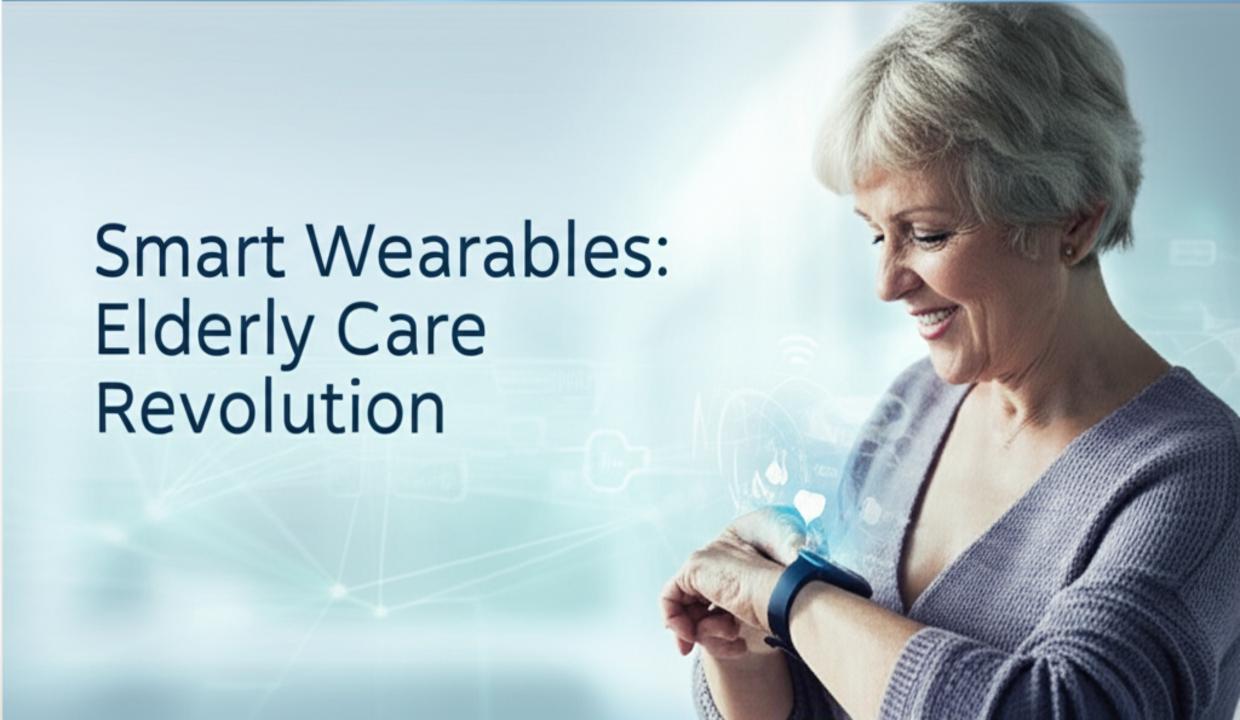
In an era where technology seamlessly integrates into every aspect of our lives, its role in transforming how wearable devices support elderly health monitoring is particularly profound. As our global population ages, ensuring the safety, independence, and well-being of seniors becomes a paramount concern. This is where wearable technology for elderly health tracking steps in, offering innovative solutions that empower older adults to live fuller lives while providing peace of mind to their families and caregivers.
This article delves deep into the world of HealthTech, specifically focusing on enhancing home health care for seniors through remote monitoring wearables. We’ll explore how these devices work, their incredible benefits, recent breakthroughs, and what the future holds for this vital sector. Get ready to discover how technology is revolutionizing elderly care remote monitoring, one wearable at a time.
Main Highlights: HealthTech: Remote Monitoring Wearables for Elderly Care
The core concept behind HealthTech: Remote Monitoring Wearables for Elderly Care is to provide continuous, non-invasive health oversight. These devices aren’t just gadgets; they are vital tools that bridge the gap between traditional healthcare settings and the comfort of a senior’s home. They offer a proactive approach to health management, moving beyond reactive interventions.
Imagine a system that can alert you to a potential health issue before it becomes an emergency. That’s the power of senior wearables. They are designed to monitor crucial health parameters, detect emergencies, and facilitate immediate communication, significantly improving the quality of life for older adults and reducing the burden on caregivers.
Working Principle: How Remote Monitoring Wearables Function
At their heart, remote monitoring wearables for elderly care rely on sophisticated sensor technology. These tiny, yet powerful, sensors are embedded within various devices, from familiar smartwatches and fitness trackers to specialized medical wearables. Their primary function is to continuously measure and collect vital health data.
This data includes essential parameters like heart rate, blood pressure, blood oxygen levels, and even ECG (electrocardiogram) readings. Beyond vital signs, these wearables also track physical activity, sleep patterns, and are often equipped with advanced algorithms to detect falls or other emergencies in real time.
Once collected, this valuable data is transmitted wirelessly – typically via Bluetooth or Wi-Fi – to caregivers, family members, or dedicated health platforms. This continuous flow of information enables proactive health management, allowing for timely, personalized interventions when needed. It’s about creating a watchful, yet unobtrusive, safety net around seniors.
Recent Breakthroughs in Senior Wearable Technology
The landscape of health tech elderly care is constantly evolving, with remarkable breakthroughs pushing the boundaries of what’s possible. One significant advancement is the integration of multi-parameter digital biomarkers. This allows for a truly comprehensive health assessment for older adults, shifting healthcare from a reactive model towards precision proactive care.
For instance, advanced wearables like the FDA-cleared KardiaMobile 6L can rapidly detect atrial fibrillation, a common heart arrhythmia in seniors. Some newer smartwatches are even exploring direct blood glucose monitoring, offering a non-invasive way for senior users with chronic conditions to manage their parameters from home, reducing the need for frequent clinical visits.
Furthermore, the ability to collect long-term, real-world data from an extensive spectrum of digital measures (some studies involve over 1268 measures) supports incredibly detailed health profiling and predictive modeling. This data goldmine can help anticipate health issues before they escalate, personalizing care like never before.
Real-World Use Cases: Impact of Smart Home Elder Care
The practical applications of remote patient monitoring for seniors are diverse and impactful. Here are some compelling real-world use cases illustrating how these technologies are making a difference:
- Cardiovascular Monitoring: Continuous heart rate and ECG monitoring are crucial for seniors with cardiovascular disorders. Devices can detect arrhythmias and other cardiovascular events, alerting caregivers promptly and potentially saving lives.
- Fall Detection and Emergency Response: Devices like the Apple Watch have integrated fall detection features. If a fall is detected and the user is unresponsive, the device can automatically alert emergency contacts or services, significantly reducing emergency response times and improving safety. This feature is a cornerstone of effective smart home elder care.
- Wandering Prevention for Cognitive Impairment: For seniors with cognitive impairment or dementia, GPS trackers are invaluable. These devices can assist in preventing wandering-related risks by providing real-time location tracking and geofencing capabilities, offering immense reassurance to families.
- Activity and Sleep Tracking: Beyond emergencies, wearables encourage overall wellness. Activity and sleep tracking features motivate seniors to maintain physical fitness, improve mobility, and enhance mental well-being through goal setting and health tracking feedback.
- Personalized Care Plans: The wealth of data collected enables data-driven insights. Caregivers can use this information to dynamically adjust medications, exercise routines, and dietary plans, leading to truly personalized and effective care plans.
Benefits and Applications: Why Remote Monitoring Matters
The advantages of integrating remote monitoring wearables into elderly care are numerous, benefiting seniors, their families, and the healthcare system as a whole. They are a cornerstone of modern elderly care remote monitoring.
- Enhanced Independence and Autonomy: Seniors can maintain their independence and autonomy, reducing the need for continuous in-person supervision. This enhances their safety and significantly improves their quality of life by allowing them to age in place comfortably.
- Peace of Mind for Families and Caregivers: Families and healthcare providers gain immense peace of mind through real-time remote health status updates and alerts. Knowing a loved one is being monitored provides a crucial layer of security.
- Holistic Health Support: These devices support both mental health (by reducing anxiety through continuous monitoring) and physical health (by motivating activity and enabling early intervention for potential issues).
- Chronic Disease Management: Remote monitoring enhances the management of chronic diseases by providing consistent data for healthcare providers. This proactive approach can significantly reduce hospitalization risk via remote monitoring and prompt clinical responses, aligning with the principles of remote patient monitoring.
Future Potential and Current Limitations
While the present capabilities of senior wearables are impressive, the future holds even greater promise. There’s potential for more integrated systems biology approaches, combining genomics with wearable data. This could further improve precision medicine tailored for aging populations, offering truly individualized health strategies.
Expanding multi-sensor networks and leveraging advanced AI analytics can dramatically improve the prediction of adverse events like falls or cognitive decline. However, these require further rigorous validation to ensure accuracy and reliability in diverse real-world settings. This represents the cutting edge of health tech elderly innovation.
Despite the advancements, challenges remain. Bridging the digital divide for older adults who may be less comfortable with technology is crucial. Ensuring long-term adherence to wearable use is another hurdle, requiring user-friendly designs and clear benefits. Connectivity issues, data privacy concerns, and interoperability with existing healthcare providers’ systems are also ongoing areas of development that require attention to maximize the impact of wearable technology applications in healthcare.
What’s New in 2025?
Looking ahead to 2025, the evolution of HealthTech for elderly care continues at a rapid pace. The focus is shifting towards more intelligent, intuitive, and integrated systems. Next-gen wearables are poised to combine sophisticated AI algorithms with multi-sensor inputs and robust cloud analytics.
This powerful combination aims to significantly improve the early detection of health deterioration, helping to reduce hospital visits and fostering sustainable aging-in-place strategies for seniors. A key trend for 2025 is also the emphasis on user-friendly designs, tailored specifically to older adults’ preferences and accessibility needs, ensuring broader adoption and consistent use.
Pricing and Accessibility
The cost of remote monitoring wearables varies widely, from affordable fitness trackers to specialized medical-grade devices that can be quite an investment. Basic senior wearables like activity trackers might cost as little as $50-$100, while advanced smartwatches or dedicated medical alert systems with monthly monitoring fees could range from $200 to $500 upfront, plus monthly subscriptions between $30-$70.
Accessibility is also a factor. While many devices are readily available online and in electronics stores, understanding the various features and choosing the right one requires some research. Insurance coverage for these devices is still evolving, but some plans may offer partial reimbursement, especially for medically prescribed monitoring solutions.
Pros and Cons
| Pros | Cons |
|---|---|
| Enhances senior independence and safety | Potential initial cost and ongoing subscription fees |
| Provides peace of mind for families and caregivers | Requires technological comfort and adherence for long-term use |
| Enables proactive health management and early intervention | Connectivity issues and data privacy concerns exist |
| Supports chronic disease management and reduces hospitalizations | Interoperability with existing healthcare systems can be a challenge |
| Offers detailed health insights for personalized care | Risk of false alarms or missed critical events |
FAQ
-
What is elderly care remote monitoring?
Elderly care remote monitoring uses wearable devices and smart home technology to continuously track a senior’s health, activity, and safety from a distance. It aims to provide real-time data, detect emergencies, and offer peace of mind to caregivers, enabling seniors to maintain independence at home. It’s a key part of modern health tech elderly solutions. -
Are these senior wearables easy for older adults to use?
Many modern senior wearables are designed with user-friendliness in mind, featuring large displays, simple interfaces, and intuitive controls. Some require minimal interaction from the user, functioning largely in the background to monitor health parameters. However, comfort with technology varies among individuals. -
What kind of data do remote patient monitoring devices collect?
These devices can collect a wide range of data, including vital signs like heart rate, blood pressure, and oxygen saturation. They also track physical activity levels, sleep patterns, and can detect falls. Advanced models may monitor ECG, blood glucose, or even provide GPS tracking for wandering prevention. -
How do these wearables enhance independence for seniors?
By providing a continuous safety net and health oversight, wearables reduce the need for constant in-person supervision. Seniors can confidently engage in daily activities, knowing that help is available if needed, and their health is being discreetly monitored, fostering a sense of autonomy and control. -
What are the main privacy concerns with elderly care remote monitoring?
Privacy concerns revolve around the security of sensitive health data and who has access to it. It’s crucial for users and families to choose reputable providers with strong data encryption and privacy policies. Understanding how data is stored, shared, and protected is paramount when adopting such systems.
Conclusion
The integration of HealthTech, particularly remote monitoring wearables, is undeniably transforming elderly care remote monitoring. These innovative devices offer a powerful blend of independence, safety, and peace of mind for seniors and their families. From continuous vital sign tracking to emergency fall detection and personalized care insights, senior wearables are proving to be invaluable tools in fostering a better quality of life for our aging population.
While challenges like the digital divide and data interoperability remain, ongoing advancements promise an even brighter future. As technology becomes more intuitive and integrated, the dream of comprehensive, proactive, and dignified aging-in-place becomes an increasingly tangible reality. Embrace the future of elderly care – it’s smarter, safer, and more connected than ever. Learn more About Us and feel free to Contact us with any questions. #ElderlyCare #HealthTech
Watch More in This Video
Disclaimer: All images and videos are sourced from public platforms like Google and YouTube. If any content belongs to you and you want credit or removal, please inform us via our contact page.